The idea of a mechanic who comes to you is still new to many drivers, and it naturally raises questions. What can actually be done in a driveway? How does booking work? Is it as good as a trip to a shop? Which problems are better suited to a full garage? This FAQ answers the most common questions about on site car repair, so you know what to expect before you call. If you are looking for a mobile mechanic in Port St. Lucie, these answers can help you decide whether on site service fits your situation, how to prepare for a visit, and what to ask when you book.
What Is a Mobile Mechanic?
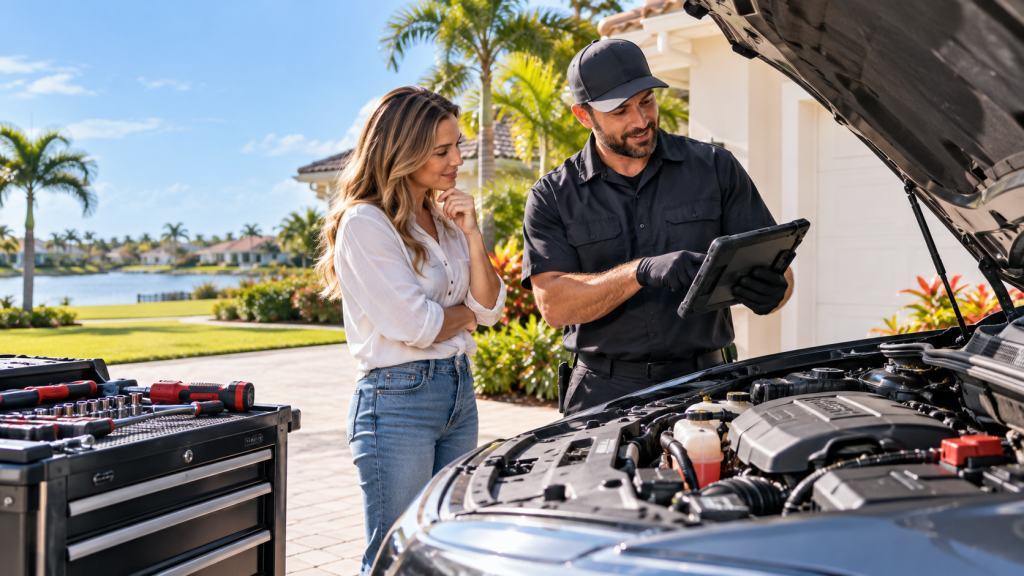
A mobile mechanic is an automotive technician who travels to your location with the tools, equipment, and parts needed to diagnose and repair your vehicle. Instead of driving your car to a shop and waiting, or arranging a ride home, the work happens where the car is parked, whether that is your driveway, your office lot, or another convenient spot. Many mobile technicians carry diagnostic scan tools, hand and power tools, a battery or power source, and commonly used parts, and they order what else is needed for a given job.
What Kinds of Repairs Can Be Done On Site?
A wide range of common maintenance and repair jobs can often be handled at your location. Depending on the vehicle and the situation, these can include:
- Battery testing and replacement
- Starter and alternator diagnosis and replacement
- Brake inspections and brake pad and rotor replacement
- Oil and filter changes and other fluid services
- Check engine light diagnostics and scanning for trouble codes
- Spark plugs, ignition coils, and tune up items
- Belts, hoses, and cooling system work such as a thermostat or water pump
- Air conditioning diagnosis and some repairs
- Pre purchase and general vehicle inspections
- No start and breakdown troubleshooting
What is available can vary by technician and by vehicle, so the best approach is to describe your problem when you contact the shop and ask whether it can be handled on site.
What Repairs May Need a Full Shop?
Some jobs need equipment or a work environment that is hard to bring to a driveway. Examples include major engine or transmission repairs, work that needs a vehicle lift, alignments, tire mounting and balancing that require a machine, heavy structural or body work, and certain advanced electrical or computer programming tasks. A trustworthy mobile mechanic will tell you honestly when a job is better suited to a shop, and may be able to inspect the problem first so you know what you are dealing with before you tow or drive it anywhere.
How Does Booking Usually Work?
The specifics are best confirmed when you contact the business, but the process generally looks something like this. You reach out through the phone number or the form on the website, describe what is happening with the vehicle, and share basic details such as the year, make, model, and mileage. The business asks any follow up questions, explains how it can help, and arranges a time and place. At the scheduled time, the technician arrives, looks at the vehicle, and talks through the findings and the recommended work before proceeding. The contact details are listed at the end of this article.
What Information Should I Have Ready?
- The year, make, model, and approximate mileage of the vehicle
- A description of the symptoms, such as noises, smells, warning lights, or starting trouble
- When the problem started and whether it happens all the time or only sometimes
- Any recent repairs or maintenance
- The location where the vehicle is parked
- Whether the car is drivable or stuck
The more detail you share, the better prepared the technician can be, including having the right parts available.
How Should I Prepare for the Visit?
A little preparation helps the work go smoothly. Park the vehicle where the technician has room to work, ideally on a flat, stable surface, with space around it and enough access to open the hood and doors. Make sure the area is safe, and clear out personal items that might be in the way. Keep the keys handy, and have your owner’s manual available in case it is needed. If the vehicle is parked at an apartment complex, a business, or a place with rules about repairs, it is wise to check ahead that on site work is allowed.
Do I Need to Be There?
This depends on the business and the job. Being present is helpful because the technician can ask questions, show you what they find, and get your approval for any additional work. If you cannot be there, ask the business what its approach is and how it handles keys, approvals, and communication. Do not assume anything. Confirm the details when you book.
How Do Estimates and Payment Work?
Policies on estimates, pricing, and payment methods vary from business to business, so ask when you schedule. A good technician explains what is wrong, what the recommended repair involves, and what the options are before starting. You should feel free to ask questions, ask to see worn or failed parts, and ask what is urgent and what can wait. It is also reasonable to ask how the business handles unexpected findings, such as discovering another problem during a repair.
Are Parts and Repairs Warrantied?
Warranty terms differ, so this is an important question to ask before work begins. Ask whether parts and labor carry any coverage, what the terms are, and how to handle a problem after the repair. Get the answers in writing where possible, and keep your receipts and paperwork.
Is a Mobile Mechanic as Good as a Shop?
For many jobs, yes. The quality of the work depends on the skill, experience, and care of the technician, and not on the location. A mobile mechanic can follow the same repair procedures and use professional tools and quality parts for the jobs they take on. The main differences are convenience and equipment. Mobile service saves you time and removes the need for a ride, while a full shop has lifts and specialized machines for larger jobs. Choosing between them comes down to what your vehicle needs. Asking about experience and how they approach the work can help you feel confident.
What About My Car Not Starting?
No start problems are one of the most common reasons people call a mobile mechanic, because the car cannot be driven to a shop. A technician can test the battery, the starter, the charging system, and other common causes right where the car sits. Our guide to the top 10 reasons your car won’t start and how to get back on the road explains the usual suspects, which can help you describe the symptoms when you call. If you are stranded somewhere unsafe, such as a roadside or highway shoulder, prioritize your safety and call for emergency or roadside assistance first.
Can a Mobile Mechanic Help With Routine Maintenance?
Yes, and routine maintenance is a good use of the service. Oil changes, fluid checks, brake inspections, battery tests, belt and hose checks, and seasonal inspections can often be done while you are at home or at work. That makes it easier to keep up with the schedule in your owner’s manual, which is one of the best ways to avoid bigger problems down the road. Regular checkups also give a technician the chance to spot small issues early.
How Does Florida Weather Affect Mobile Service and My Car?
Heat, humidity, heavy rain, and storms are part of life on the Treasure Coast, and they affect both your car and the scheduling of outdoor work. Rain or lightning can delay a visit, and a technician may suggest a covered area or a different time. Your vehicle faces its own challenges, since heat and humidity wear on batteries, cooling systems, tires, and rubber parts, and salt air and flooding can add corrosion. Our article on Florida heat and storms and car maintenance priorities in Port St. Lucie explains what to focus on and why.
How Can I Tell if a Mobile Mechanic Is Trustworthy?
- They explain the problem clearly and answer your questions without pressure
- They are open about what they can and cannot do on site
- They tell you when a job needs a shop
- They are willing to show you the old parts and explain the work
- They are clear about estimates, approvals, and warranties before starting
- They communicate promptly and show up when they say they will
- They have a track record you can check, such as reviews and references
Trust your instincts, and remember that you can always ask for more information or a second opinion.
Is It Safe to Have Repairs Done at My Home or Workplace?
Professional technicians follow safety practices, including proper jacking and support of vehicles, careful handling of fluids, and responsible disposal of used oil and parts. You can help by keeping children and pets away from the work area, and by following the technician’s instructions. If a technician decides that conditions are not safe for a particular job, such as an unstable surface, they may reschedule or suggest another location.
What If the Problem Is Bigger Than Expected?
Sometimes an inspection reveals more than what the symptoms suggested. In that case, a good technician explains what they found, what it means, and what your options are, including whether the repair can be done on site or needs a shop. You are in control of what work goes ahead. It is reasonable to ask for time to think, to compare options, or to ask for the findings in writing.
Ready to Ask Your Own Question?
Every vehicle and situation is a little different, so the best answers come from talking with a technician about your car. If you are thinking about on site repair, gather your vehicle details and symptoms, and reach out. A short conversation can tell you whether the work can be done at your location and what to expect.
To learn more about our services, visit our homepage. If you have questions or would like to book a visit, reach out through our contact us page and we will come to you anywhere in the Port St. Lucie area.